
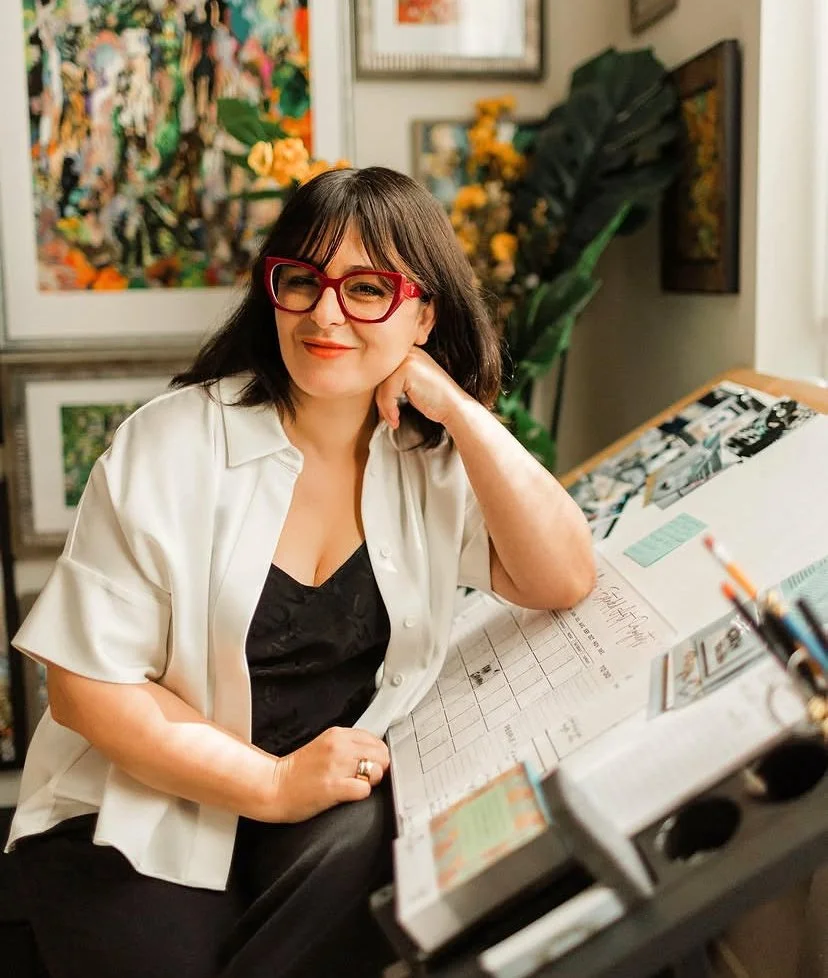
We sat down with Odeta, the mastermind and vision behind OXH Gallery, a women focused contemporary art gallery which she opened in 2024 after moving from Brooklyn to Tampa Florida. Odeta views curation, research and supporting other artists as an extension of her own layered and research rich practice. Her curation style reflects a deep commitment not just to aesthetics, but to the cultivation of community, deep reflection and elevating unheard voices.
What is your art form and how long have you been practicing?
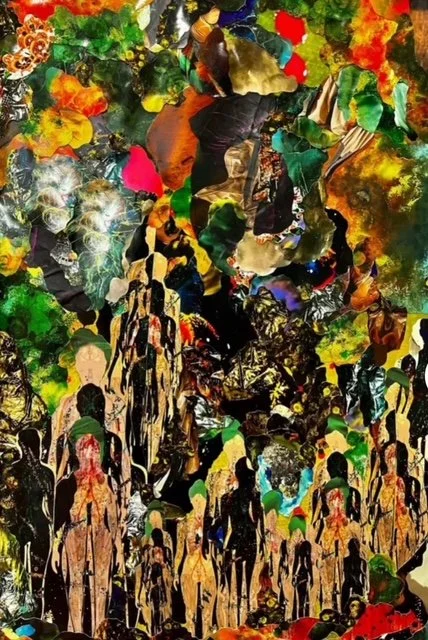
My name is Odeta Xheka. I am a multidisciplinary artist working across collage, assemblage, painting, digital media, and writing. My work often moves between the visual and the literary, exploring identity, memory, the body, and the emotional complexity of being a woman navigating multiple cultures and roles. I was born in Berat, Albania, studied art history in Athens, and spent sixteen years in Brooklyn before eventually settling in Tampa, where my practice has continued to evolve.
Art has been part of my life for as long as I can remember, but my artistic voice really began to take shape over the past two decades as I balanced motherhood, migration, and creative work.
What’s something that you've created that you are proud of or that you consider your biggest accomplishment.
One accomplishment I’m particularly proud of is founding OXH Gallery. Creating a space that elevates women artists and builds thoughtful, collaborative exhibitions has felt like a natural extension of my own artistic practice. It’s not just about showing work, but about constructing conditions where artists and audiences can encounter ideas that are emotionally and intellectually resonant. In many ways, the gallery represents the same impulse that drives my artwork: reclaiming narrative space and creating room for voices that are often overlooked.
“In many ways, the gallery represents the same impulse that drives my artwork: reclaiming narrative space and creating room for voices that are often overlooked.”
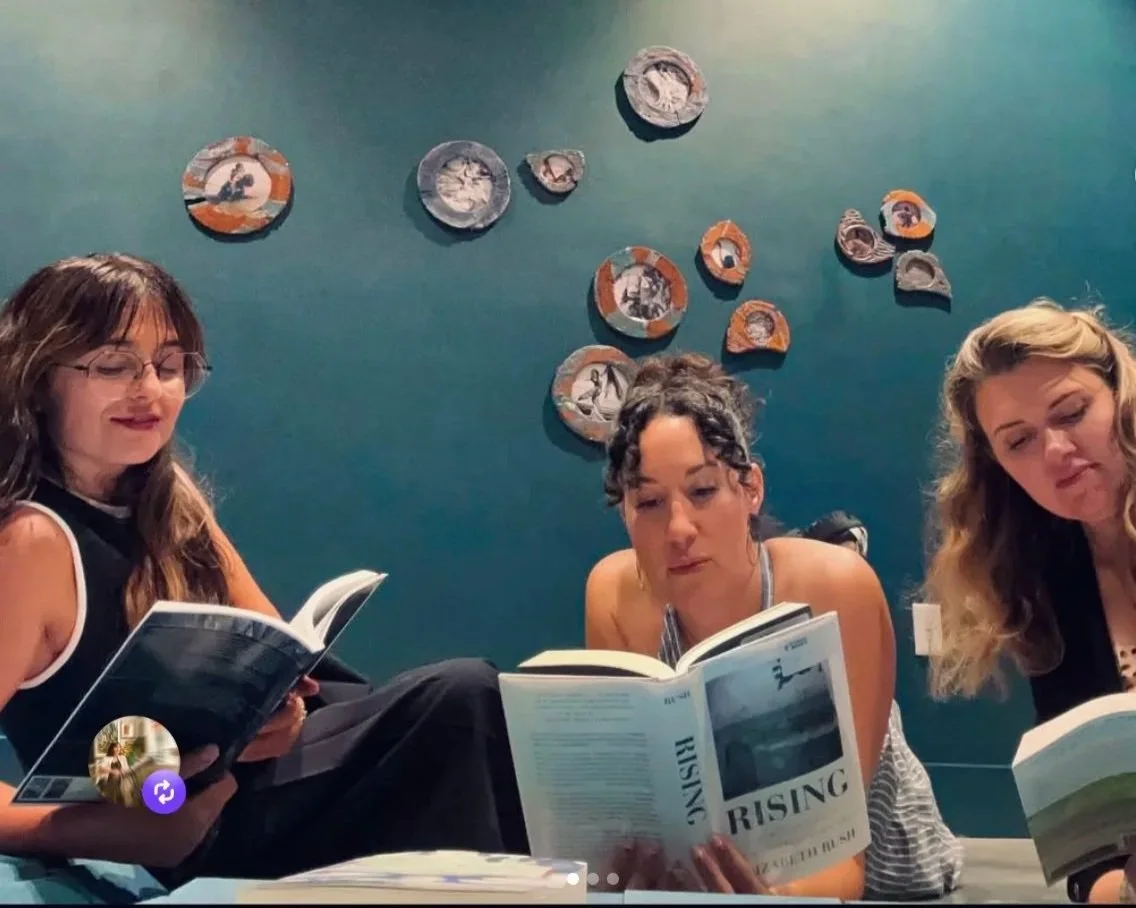
Reading at OXH Gallery at WORDS ON WATER an exhibition by Cristina Molina and Emma Georgina July 2026
How do you access your creativity?
My creative process is rarely linear. It’s more like assembling a constellation of fragments that slowly reveal their meaning. I often begin by collecting materials, images, text fragments, lace, paper, pieces of previous work and letting them sit together until something begins to speak. Collage and assemblage are natural mediums for me because they mirror how memory and identity actually function: layered, interrupted, and constantly rearranged.
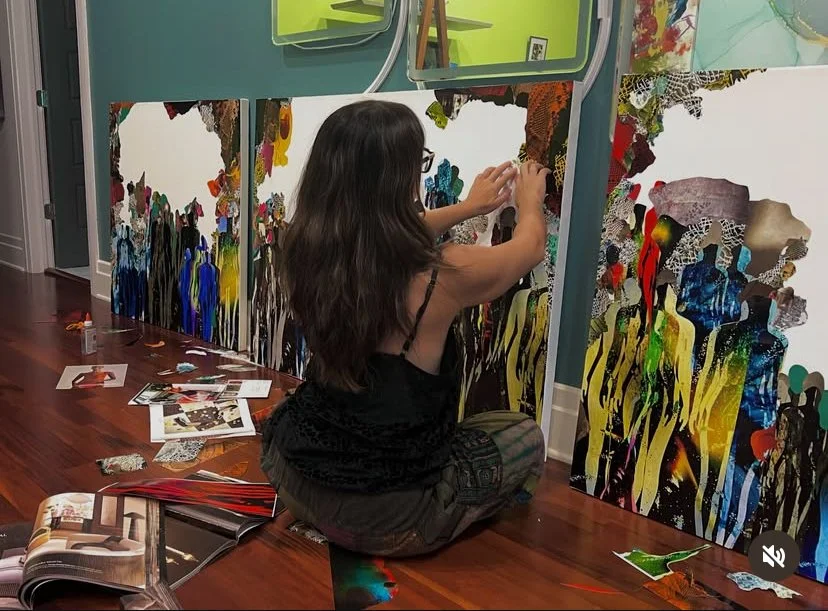
Odeta Xheka in her studio.
Do you experiment or take risks in your creative practice?
Experimentation is essential to my process. I work across mediums precisely because each one asks different questions. Some days are very tactile cutting, gluing, stitching while others are more internal: writing, reading, or thinking through a curatorial idea. I don’t see clear boundaries between these practices and, at times, that may be a tad too risky.
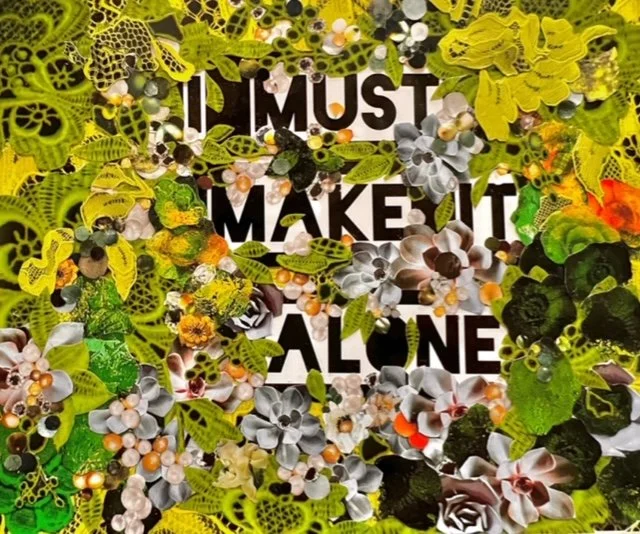
What type of things does your inner critic say to you? What’s the meanest thing your inner critic has ever said to you and how has that affected your creativity?
Like many artists, my inner critic often questions whether the work is necessary or whether the story deserves to be told at all. It asks whether the work is too personal, too fragmented, or not easily categorized.
The harshest voice tends to suggest that vulnerability might be mistaken for self indulgence or that speaking too openly might be misunderstood. Coming from a background where women were often expected to remain quiet or measured, those internalized voices can linger.
Over time, however, I’ve come to see that tension as part of the creative process. The inner critic can slow you down, but it can also sharpen your intentions. It forces you to ask whether the work is honest. When I feel that voice becoming too loud, I remind myself that art has always been my most effective way of refusing silence.
At what stage of the creative process do you notice your inner critic appears or is the loudest?
The inner critic tends to appear most strongly at the beginning and at the end of the process. At the beginning it questions whether an idea is worth pursuing at all. At the end it asks whether the work should be shared or whether it is finished enough to leave the studio.
Interestingly, the middle of the process the physical act of making is usually the quietest moment. When I am cutting, assembling, or writing, I am simply responding to materials and intuition. That stage feels less like judgment and more like listening.
Once the work is out there, there is no longer something I turn to. Whatever life it ends up having is independent of how I think about the work. In a way, that is the most honest moment of the process. The work leaves the intimacy of the studio and begins its own life in the minds and experiences of others.
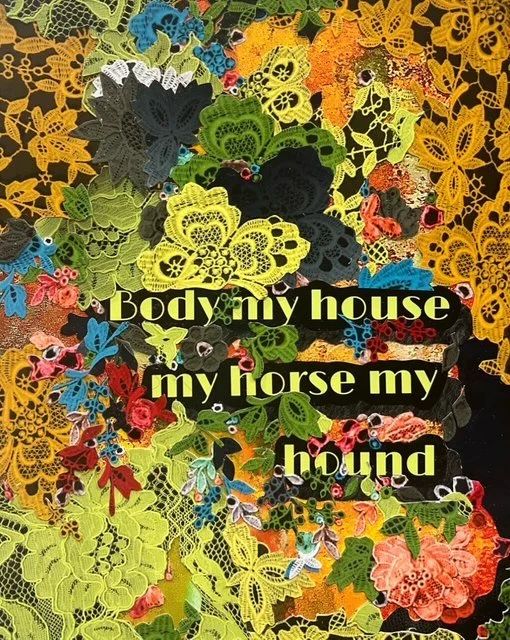
“The harshest voice tends to suggest that vulnerability might be mistaken for self indulgence or that speaking too openly might be misunderstood. Coming from a background where women were often expected to remain quiet or measured, those internalized voices can linger.”
Can you share with us both the unhealthy or unhelpful habits that you may turn to as well as some of the healthy or supportive tools that you have discovered that help you deal with your inner critic?
One helpful practice is simply stepping away and returning to the studio only when the first mental imprint, both in aesthetic and conceptual terms, has diluted and dissipated, making room for a new positioning between the creator and the creation.
It is also a reminder that doubt is a shared part of creative life.
As for less helpful habits, overthinking can sometimes slow the process. There is always the temptation to keep refining something long after it has already said what it needed to say. Over time I have learned to call that moment “end scene” rather than endlessly revising it.
Do dreams play a role in your creativity? Do you keep track of your dreams and have you ever had a dream that impacted your life? Is there a dream or dream image that you can share?
Dreams definitely influence the atmosphere of my work, even if they are not directly illustrated. Many of my pieces deal with fragments of memory, shifting identities, and emotional landscapes that feel closer to dreams than to literal storytelling.
I don’t keep a strict dream journal, but I pay attention to images or sensations that linger when I wake up. Sometimes a color combination, a gesture, or a feeling from a dream quietly finds its way into the work later.
Dreams are interesting because they bypass logic. They allow unexpected associations to emerge, which is very similar to how collage operates visually.
What are you working on now, how can people find you,and anything else you'd like to share?
Right now my work continues to move between my personal studio practice and my curatorial work through OXH Gallery. Both roles inform each other. As an artist I’m interested in creating layered visual narratives that explore memory, embodiment, and the ways personal and collective histories intersect. As a curator and gallery founder, I’m focused on creating exhibitions and collaborative environments that amplify women’s voices and connect artists across geographies and disciplines.
People can find my work through my website and on Instagram at @odeta_xheka_visuals, and through the exhibitions and programs at OXH Gallery in Tampa at @he_a_rt_project.
If there’s one thing I’d add, it’s that art for me has always been about presence. It’s about making space for complexity, contradiction, and emotional truth. In a world that often pushes us toward speed and certainty, the act of making art can be a quiet but powerful way of slowing down and paying attention.
REDO: siempre/përsëri (always/again), the two person show conceived, curated, staged, and photographed by Albanian American, multidisciplinary artist and curator Odeta Xheka opens this Friday September 4th at OXH Gallery in Tampa Florida.
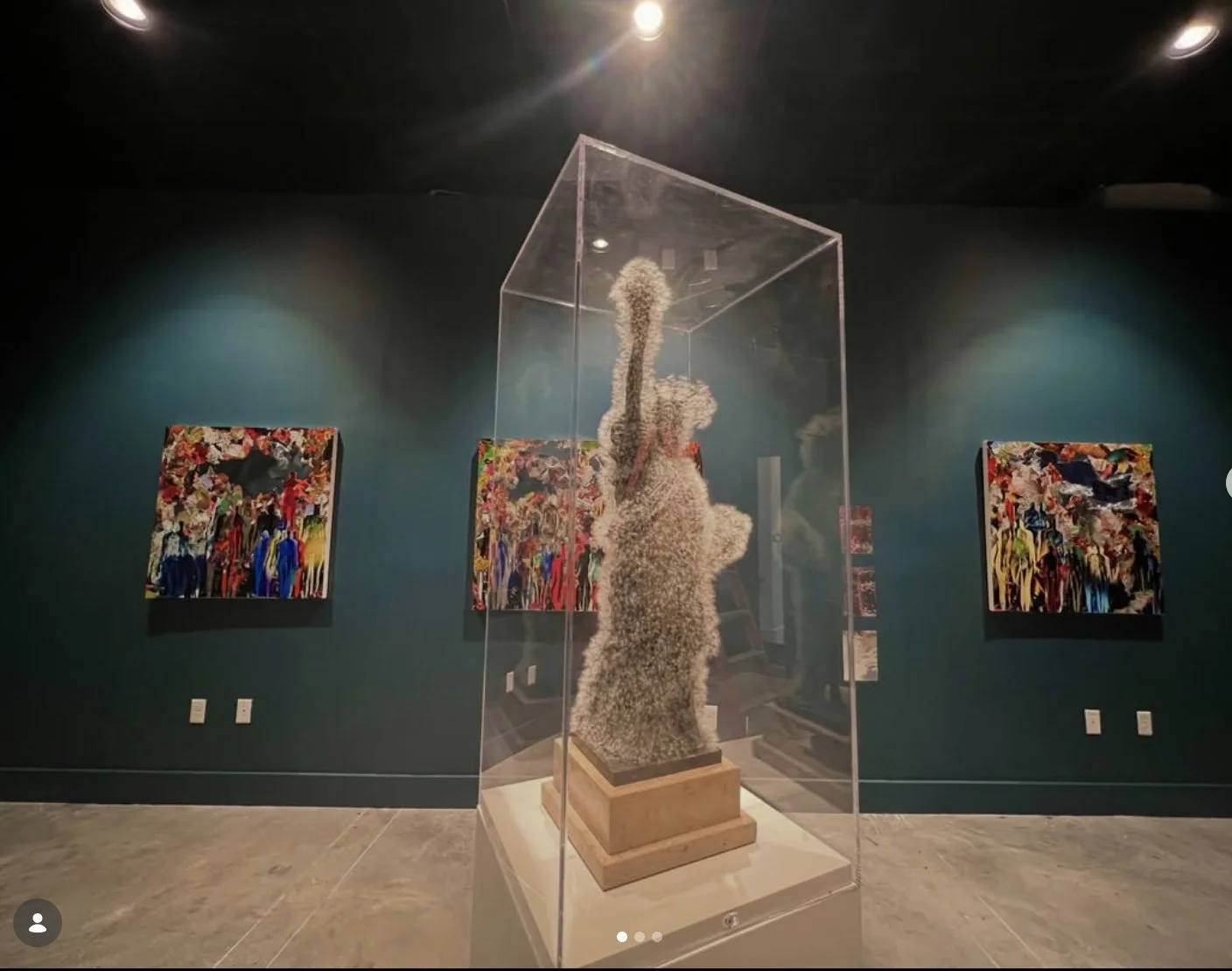
REDO: Siempre/Përsëri opens September 4th, 2026 at OXH Gallery, Hyde House Public Studio, Tampa Florida.